Plastic hangers solve quantity; garment shape still decides the limit
The common mistake is treating "space saving" as the whole story. Slim plastic hangers can make a closet look cleaner because every garment hangs at the same height and direction, but the hanger still concentrates garment weight through the shoulders and neckline. Museum textile guidance is stricter than a home closet needs to be, yet the underlying principle is useful: hanging storage should match garment type, condition, construction, and support needs.
The National Park Service notes that vertically hung garments put stress on upper body areas such as shoulders, neck, and bodice, and recommends properly sized, padded support to reduce distortion for garments that need careful storage. A family closet does not need museum-grade padded hangers for cotton T-shirts. It does need a practical version of the same judgment: fold heavy knits, use broader hangers for jackets, avoid forcing too-wide hangers into smaller shirts, and do not let a narrow hanger carry a garment whose shoulder line matters.
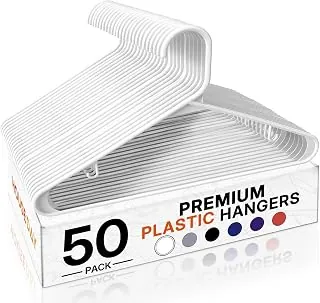
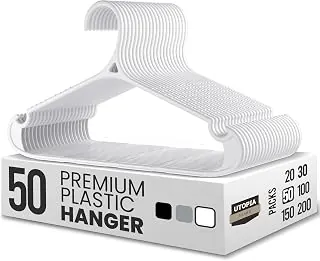
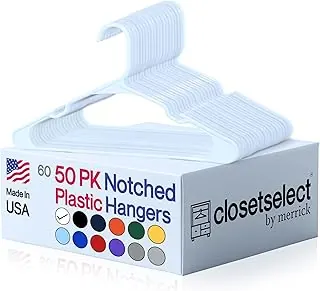
For Utopia Home's plain plastic 50-pack, that means the best use is routine clothing volume. It is the pack you use to replace bent wire hangers, organize clean laundry, standardize a guest closet, or give each child a consistent set of hangers. It is not the pack you buy to preserve tailoring, protect heirloom garments, or store winter coats for months.