Patio, Lawn & Garden > Backyard Birding & Wildlife > Birds > Food > Hummingbird Nectar · Hummingbird Nectar
Guide to Ready-to-Use Hummingbird Nectar, No Mixing Required
Ready-to-use hummingbird nectar removes the preparation step entirely: you pour the liquid straight into a clean feeder without adding sugar or water. The Kaytee Hummingbird ElectroNectar Wild Bird Food, Ready to Use, 64 Ounces is made as a naturally clear nectar with electrolytes and no added coloring, and the product instructions specify shaking
Why Choose Ready-to-Use Hummingbird Nectar?
Ready-to-use hummingbird nectar removes the preparation step entirely: you pour the liquid straight into a clean feeder without adding sugar or water. The Kaytee Hummingbird ElectroNectar Wild Bird Food, Ready to Use, 64 Ounces is made as a naturally clear nectar with electrolytes and no added coloring, and the product instructions specify shaking well before use and refrigerating after opening. The National Park Service notes that hummingbirds use long, slender bills and tube-like tongues to drink nectar from brightly-colored flowers, which gives them the energy needed to fuel their high metabolism. A ready-to-pour nectar mirrors that nectar source while removing the boiling, measuring, and mixing steps that homemade sugar water requires. The core advantage of a no-mix nectar is convenience combined with consistency. Because the product arrives ready to use, there is no risk of incorrect sugar-to-water ratios or undissolved granules that can occur when mixing at home. The product description states the formula is naturally clear and contains no added coloring; the feeder itself can provide the red visual attraction that hummingbirds notice, so colored liquid is not necessary. The National Park Service confirms that hummingbirds are amazingly adapted pollinators that drink nectar to fuel their high metabolism, supporting the purpose of supplying a liquid nectar in a backyard feeder. Community reviewers describe individual experiences in which hummingbirds accepted the nectar quickly, visited regularly, and returned for more; one user reported observing hummingbirds visiting, perching, and drinking from the active lower tiers of a red hanging hummingbird feeder on a shaded balcony, noting the product clearly did not discourage feeding. Another reviewer stated the product is not just sugar water but electrolytes and nectar, and that hummingbirds love it. These reports are anecdotal individual experiences and do not prove universal effectiveness, but they align with the product's stated ready-to-use, clear, dye-free formulation. To use this nectar, clean your hummingbird feeder prior to filling for best results, shake the bottle well, and pour the liquid directly into the feeder reservoir without adding sugar or water. For a small feeder, one reviewer filled the reservoirs about halfway, which helped manage usage. The product should be refrigerated after opening, and exposure to light will discolor the liquid, so storage in a dark, cool place is advisable. One reviewer recommended using only the smallest amount and replacing it every two days or so to maintain freshness. A red hanging feeder can supply the visual attraction, making added coloring unnecessary. Individual reviewers reported that hummingbirds started visiting regularly after filling and that the clear formula kept the feeder looking clean. Because community observations describe individual experiences only, results may vary by location, weather, and competing food sources. This product is intended for hummingbirds and is not designed for orioles or other non-hummingbird species. The product description notes that exposure to light will discolor the liquid, and the formula must be shaken well before use and refrigerated after opening, so it is not a shelf-stable, leave-out-indefinitely product once opened. Community reviewers reported individual experiences only; one noted that yellow jackets feasted at the feeders all day, which can interfere with hummingbird visits and is not a product defect. Another reviewer mentioned replacing the nectar every two days or so, which means ongoing maintenance is still required even though no mixing is needed. The National Park Service source describes hummingbird biology and nectar-feeding behavior generally and does not test, verify, or establish the current model's behavior or effectiveness. Individual results vary, and community reviews cannot support a universal claim that this nectar will attract hummingbirds in every backyard or condition.
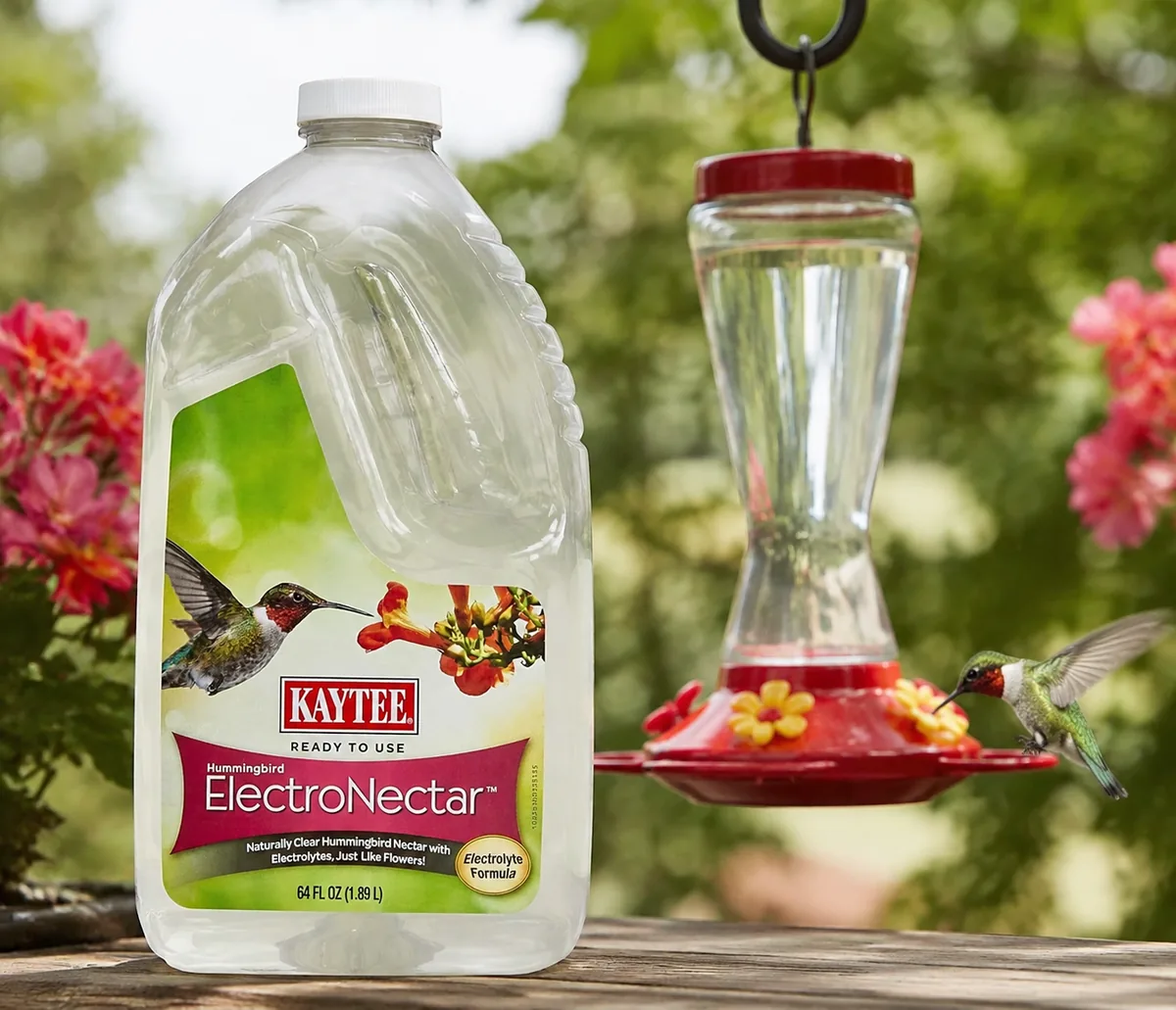
Kaytee Hummingbird ElectroNectar: Product Overview
Kaytee Hummingbird ElectroNectar is a ready-to-use liquid hummingbird nectar that requires no mixing. Its naturally clear formula contains electrolytes and no added coloring, making it a convenient choice for backyard bird enthusiasts. Simply pour it into a clean feeder; do not add sugar or water. Shake well before use and refrigerate after opening. Note that exposure to light will discolor the liquid, but this does not affect its effectiveness. This product is designed to attract hummingbirds without the hassle of preparing homemade nectar. The product is positioned as a no-mix solution for hummingbird feeding. The ready-to-use format eliminates the need to boil water, dissolve sugar, or measure ingredients, addressing the user's problem of convenience. The clear formula, with no added coloring, appeals to those who prefer a natural appearance and rely on the feeder's color to attract birds. Electrolytes are included to support the birds' health, though the specific benefits are not detailed in the product description. The instruction to clean the feeder before filling ensures hygiene, and refrigeration after opening maintains freshness. The note about light-induced discoloration is a practical consideration for storage, but it does not imply a quality issue. Community reviews consistently report that hummingbirds accept the nectar quickly and visit regularly, supporting its effectiveness in attracting birds. However, individual experiences may vary, and factors like feeder placement and weather can influence results. To use Kaytee Hummingbird ElectroNectar, start by cleaning your hummingbird feeder thoroughly, as recommended for best results. Shake the bottle well before pouring to ensure the solution is evenly mixed. Fill the feeder with the nectar, but do not add sugar or water, as the product is ready to use. After filling, place the feeder in a location that is visible to hummingbirds, such as near flowers or in a shaded area, as one reviewer noted success on a shaded balcony. Refrigerate any unused portion after opening to maintain freshness. Replace the nectar every 2 days or so, as suggested by a reviewer, to keep it appealing and prevent spoilage, especially in warm weather. The clear formula helps keep the feeder looking clean, and the lack of red dye means the feeder itself should provide visual attraction. For small feeders, fill reservoirs only partially to avoid waste, as one user did. Regular cleaning and fresh nectar will encourage hummingbirds to return. This product is not suitable for those who prefer to mix their own nectar from concentrate or sugar water, as it is a ready-to-use liquid. It contains no added coloring, so if you rely on red dye to attract hummingbirds, you may need a feeder with red parts. The nectar should be refrigerated after opening and may discolor when exposed to light, which could be a cosmetic concern. Individual results may vary; one reviewer noted that after heavy rain, the nectar became diluted and less appealing, so you must maintain freshness by replacing it regularly. The product is designed for hummingbirds only and is not intended for orioles or other species. Always follow the instructions to avoid overfilling or improper storage.
How to Use Ready-to-Use Nectar in Your Feeder
- To use this ready-to-use hummingbird nectar, first clean your feeder thoroughly before filling. Shake the bottle well, then pour the nectar directly into the feeder—do not add sugar or water. Refill as needed, and refrigerate any unused portion after opening. Note that exposure to light may discolor the liquid, so store it properly.
- Start by selecting a clean hummingbird feeder, preferably one with red parts to attract birds, as the nectar itself is clear. Before first use, wash the feeder with hot water and a mild soap, rinsing thoroughly to remove any residue. Shake the bottle of nectar well to mix the electrolytes. Pour the nectar into the feeder's reservoir, filling it to the desired level—some users find filling halfway sufficient for small feeders. Do not dilute with water or add sugar, as the product is pre-mixed. After filling, hang the feeder in a location visible to hummingbirds, such as near flowers or a shaded balcony. Monitor the nectar level and refill as needed, typically every 2 days in warm weather to prevent spoilage. After opening, store the remaining nectar in the refrigerator to maintain freshness. Clean the feeder every time you refill to prevent mold growth. If you notice the nectar becoming cloudy or discolored, replace it immediately. For best results, place the feeder in a spot that is easy to observe and maintain, ensuring a steady supply of fresh nectar to attract and retain hummingbirds.
- This ready-to-use nectar is not suitable for those who prefer to mix their own sugar water, as it is pre-mixed and should not be diluted. The product contains no added coloring, so the feeder must provide sufficient red visual attraction; if your feeder lacks red, hummingbirds may be less attracted. Exposure to light can discolor the liquid, which may be unappealing but does not affect safety. After opening, refrigeration is required, which may be inconvenient for some users. The nectar should be replaced every 2 days or so to maintain freshness, especially in warm weather. Individual results vary; one reviewer noted that heavy rain can dilute the nectar, reducing its appeal. This product is intended for hummingbirds only and should not be used for other bird species. Always follow the manufacturer's instructions to ensure safety and effectiveness.
Ready-to-Use vs. Concentrate: Which Is Right for You?
| Answer | Ready-to-use nectar offers unmatched convenience: it comes pre-mixed, so you simply pour it into a clean feeder without adding sugar or water. This eliminates measuring, boiling, and cooling, making it ideal for quick refills or for those with limited time. In contrast, concentrate requires you to mix it with water before use, which adds a step but allows you to prepare larger batches and often reduces storage space. The ready-to-use option, like the Kaytee Hummingbird ElectroNectar, is naturally clear and contains electrolytes, with no added coloring. It is designed to be used directly, and you should shake well before use and refrigerate after opening. Concentrates, such as the Hummingbird ElectroNectar 16 oz Concentrate that makes 128 oz, or the Naturally Fresh Hummingbird Nectar Concentrate with Nectar Defender, offer flexibility in batch size and may last longer once mixed, but they require careful mixing to achieve the correct ratio. Your choice depends on whether you prioritize grab-and-go ease or prefer to manage larger quantities and potentially reduce per-use cost. |
|---|---|
| Why it matters | The distinction between ready-to-use and concentrate formats centers on preparation and storage. Ready-to-use nectar is a pre-diluted liquid, as seen in the product observation for B007FJ0FJU, which states it is 'Ready to use. Do not add sugar or water.' This means the user can fill the feeder immediately, saving time and avoiding the risk of incorrect sugar-to-water ratios that can occur with manual mixing. The product also includes electrolytes and no added coloring, which are beneficial for bird health and feeder cleanliness. On the other hand, concentrates, such as the 'Hummingbird ElectroNectar Wild Bird Food,16 oz Concentrate,Makes 128 oz of ElectroNectar' (same-intent-1) or the 'Hummingbird Hydrate Concentrate Nectar 16oz' (same-intent-2), require dilution. This adds a step but allows the user to prepare only what they need, potentially reducing waste. The 'Naturally Fresh Hummingbird Nectar Concentrate with Nectar Defender' (same-intent-3) even claims to make 64 oz and last up to two weeks, suggesting a longer shelf life after mixing, which can be advantageous for infrequent users. However, concentrates demand accurate measurement to avoid harming birds with overly concentrated or diluted solutions. Community reviews for the ready-to-use product highlight its convenience, with one user noting 'No boiling water, no mixing, no fuss,' and another appreciating that it is 'ready to pour, clear, and does not require mixing sugar and water.' These experiences underscore the practical benefits of the ready-to-use format for everyday use. |
| How to apply it | To decide between ready-to-use and concentrate, consider your feeding routine and storage capacity. If you have a small feeder or feed only a few birds, ready-to-use nectar is ideal because you can pour directly into a clean feeder without preparation, as recommended in the product instructions. For example, a user on a shaded balcony found it convenient to fill the feeder halfway, and the birds accepted it quickly. This format is also suitable for those who may be less confident in mixing ratios or who want to avoid the mess of handling sugar and water. On the other hand, if you have multiple feeders or a high volume of birds, a concentrate like the 16 oz that makes 128 oz (same-intent-1) allows you to mix larger batches, potentially saving money and reducing packaging waste. The 'Naturally Fresh' concentrate (same-intent-3) offers the added benefit of a nectar defender, which may help keep the nectar fresh for up to two weeks, reducing the frequency of refills. When using any concentrate, always follow the mixing instructions carefully to ensure the correct sugar-to-water ratio, and clean your feeder before refilling, as advised for the ready-to-use product. For best results, shake the ready-to-use nectar well before use and refrigerate after opening to maintain freshness, as noted in the product facts. |
| Limit | The ready-to-use format has limitations in terms of storage and shelf life. The product observation notes that exposure to light will discolor the liquid, and it must be refrigerated after opening, which may be inconvenient for those with limited fridge space. Additionally, ready-to-use nectar is typically sold in larger bottles, such as 64 ounces, which may be more than needed for small feeders, potentially leading to waste if not used quickly. Community reviews mention that nectar should be replaced every two days or so, especially in warm weather, which could increase consumption. Concentrates, while offering flexibility, require careful mixing; an incorrect ratio could harm birds or reduce attractiveness. The 'Hummingbird & Oriole Nectar' concentrate (same-intent-4) is sucrose-based with no additives, but it still requires mixing. Furthermore, some concentrates may contain preservatives or additives, so it's important to choose a dye-free option, as the ready-to-use product is. Finally, individual experiences vary; one reviewer noted that after heavy rain, the nectar became diluted and less appealing, so regardless of format, you must maintain freshness and cleanliness to ensure birds continue visiting. |
Safety and Practical Considerations for Hummingbird Nectar
When using ready-to-use hummingbird nectar, safety and practicality come down to three key factors: the formula's composition, feeder hygiene, and environmental conditions. Kaytee Hummingbird ElectroNectar is naturally clear, contains electrolytes, and has no added coloring, which aligns with safe feeding practices. The National Park Service notes that hummingbirds drink nectar from brightly colored flowers for energy, but this product's clear formula avoids artificial dyes and instead relies on the feeder's color to attract birds. For everyday use, clean the feeder before filling, shake the bottle well, and refrigerate after opening. Because exposure to light can discolor the liquid, proper storage matters. Community reviews confirm that the nectar is quickly accepted—one user observed hummingbirds visiting a shaded balcony feeder shortly after filling. That said, environmental factors like rain can dilute the nectar and reduce its appeal, so regular replacement—every two days, as one reviewer suggests—helps maintain freshness. Keeping these considerations in mind ensures the product stays effective and safe for hummingbirds. The safety of hummingbird nectar depends mainly on its ingredients and how it is handled. The product's clear, dye-free formula with electrolytes is designed to mimic natural flower nectar, which the National Park Service describes as the energy source powering hummingbirds' high metabolism. By avoiding added coloring, the product reduces potential risks from artificial dyes—a concern for some bird enthusiasts. Its ready-to-use format also eliminates the need to mix sugar and water, which can lead to incorrect concentrations if done improperly. Feeder hygiene is another critical aspect; the product instructions explicitly recommend cleaning the feeder before filling to prevent mold and bacterial growth that could harm birds. Storage guidance—shaking well, refrigerating after opening, and protecting from light—helps preserve the nectar's quality, since light exposure can cause discoloration, though that does not necessarily indicate spoilage. Community experiences highlight practical safety as well: one reviewer noted that the clear formula kept the feeder looking clean, while another emphasized replacing the nectar every two days to maintain freshness, especially after rain, which can dilute the solution. These practices align with general bird-feeding safety principles, ensuring the nectar remains a reliable food source without unintended side effects. To put these safety considerations into practice, start by selecting a feeder with red accents. The National Park Service notes that hummingbirds are attracted to brightly colored flowers, so the feeder's color can serve that role and make colored nectar unnecessary. Before first use, thoroughly clean the feeder with warm water and a mild brush, avoiding soap residue, as the product instructions recommend. Shake the bottle well to ensure the electrolytes and nectar are evenly distributed, then pour the ready-to-use liquid directly into the feeder—no mixing or dilution is needed. After filling, place the feeder in a spot that is visible but protected from excessive direct sunlight, since the product notes that light exposure can discolor the liquid; a shaded balcony, as one reviewer used, works well. Refrigerate the opened bottle to maintain freshness, and check the feeder regularly. Replace the nectar every two days, or more often after rain, as one community reviewer advised, to prevent dilution and spoilage. Clean the feeder each time you refill to avoid buildup. For storage, seal the bottle tightly with the cap to prevent spills in the fridge. Following these steps helps keep the nectar safe and attractive to hummingbirds, encouraging regular visits. While the product is designed for convenience and safety, several limitations are worth noting. The National Park Service source, which describes hummingbirds' nectar-drinking behavior, is historical and does not test or verify the current model's performance; it provides general background rather than product-specific validation. Community reviews are anecdotal and reflect individual experiences, not universal proof—for instance, one reviewer noted that yellow jackets dominated the feeder, which could deter hummingbirds and is an environmental factor beyond the product's control. The product's clear formula may also be less visually appealing to some birds if the feeder itself lacks red accents, though the National Park Service confirms that hummingbirds are attracted to brightly colored flowers, making feeder color crucial. Exposure to light can discolor the liquid, potentially affecting its appearance, though not necessarily its safety. The nectar's effectiveness can be reduced by rain dilution, requiring more frequent replacement, which may be inconvenient. Additionally, the product is specifically for hummingbirds, not other species like orioles, and users who prefer mixing their own nectar may find the ready-to-use format less flexible. These limitations do not negate the product's benefits, but they do highlight the importance of proper feeder placement, hygiene, and environmental management.
Hummingbird Nectar Options

Kaytee Hummingbird ElectroNectar Wild Bird Food, Ready to Use, 64 Ounces
B007FJ0FJU
Good fit
- Naturally clear Hummingbird nectar formula
- Ready to use. Do not add sugar or water
- Clean your Hummingbird feeder prior to filling for best results
Limits
- The supplied product observation records product identity only.

Hummingbird ElectroNectar Wild Bird Food, 16 oz Concentrate, Makes 128 oz of ElectroNectar (Pack of 4)
B0GHD87PRJ
Good fit
- Hummingbird ElectroNectar Wild Bird Food, 16 oz Concentrate, Makes 128 oz of ElectroNectar (Pack of 4)
Limits
- The supplied product observation records product identity only.

Hummingbird Hydrate Concentrate Nectar 16oz
B0FLW16MP5
Good fit
- Hummingbird Hydrate Concentrate Nectar 16oz
Limits
- The supplied product observation records product identity only.

Naturally Fresh Hummingbird Nectar Concentrate with Nectar Defender | Bird-safe, Dye-free, Just add water, No artificial preservatives, Makes 64 oz, Nectar lasts up to 2 weeks, Made in USA
B00PYDVP7A
Good fit
- Naturally Fresh Hummingbird Nectar Concentrate with Nectar Defender | Bird-safe, Dye-free, Just add water, No
Limits
- The supplied product observation records product identity only.

Hummingbird & Oriole Nectar | Pure & Healthy Sucrose Nectar for Birds | Easy Mix Concentrate | Natural Flower Sugar Alternative, No Additives | Safe for Feeders | 24 oz | Sucrose-Based Easy Mix Concentrate, No Additives, Natural Flower Sugar Alternative, Suits All Nectar Feeders
B009726G7I
Good fit
- Hummingbird & Oriole Nectar | Pure & Healthy Sucrose Nectar for Birds | Easy Mix Concentrate | Natural Flower Sugar
Limits
- The supplied product observation records product identity only.
Sources and Evidence
This evidence combines direct Amazon product and review records, an independent authority source, and community experience reports. Community material is used for language and edge cases, not as universal proof. The product is a ready-to-use, clear nectar with electrolytes and no added coloring, as stated in the product description. Community reviews
- Kaytee Hummingbird ElectroNectar Wild Bird Food, Ready to Use, 64 Ounces
Direct Amazon observation; supports only the recorded product identity and supplied product facts.
- Amazon customer review excerpts
Community experience report, not universal evidence: Direct Amazon customer review excerpts; individual experiences only, not universal product facts.
- Hummingbird ElectroNectar Wild Bird Food,16 oz Concentrate,Makes 128 oz of ElectroNectar,(Pack of 4)
Direct Amazon observation; supports only the recorded product identity and supplied product facts.
- Hummingbird Hydrate Concentrate Nectar 16oz
Direct Amazon observation; supports only the recorded product identity and supplied product facts.
- Naturally Fresh Hummingbird Nectar Concentrate with Nectar Defender | Bird-safe, Dye-free, Just add water, No artificial preservatives, Makes 64 oz, Nectar lasts up to 2 weeks, Made in USA
Direct Amazon observation; supports only the recorded product identity and supplied product facts.
- Hummingbird & Oriole Nectar | Pure & Healthy Sucrose Nectar for Birds | Easy Mix Concentrate | Natural Flower Sugar Alternative, No Additives | Safe for Feeders | 24 oz | Sucrose-Based Easy Mix Concentrate, No Additives, Natural Flower Sugar Alternative, Suits All Nectar Feeders
Direct Amazon observation; supports only the recorded product identity and supplied product facts.
- Pollinators - Hummingbirds (U.S. National Park Service)
Direct source page excerpt; full page text is not retained. Authority policy permits factual use within the quoted boundary.
Product recap
- Kaytee Hummingbird ElectroNectar Wild Bird Food, Ready to Use, 64 Ounces
- Hummingbird ElectroNectar Wild Bird Food, 16 oz Concentrate, Makes 128 oz of ElectroNectar (Pack of 4)
- Hummingbird Hydrate Concentrate Nectar 16oz
- Naturally Fresh Hummingbird Nectar Concentrate with Nectar Defender | Bird-safe, Dye-free, Just add water, No artificial preservatives, Makes 64 oz, Nectar lasts up to 2 weeks, Made in USA
- Hummingbird & Oriole Nectar | Pure & Healthy Sucrose Nectar for Birds | Easy Mix Concentrate | Natural Flower Sugar Alternative, No Additives | Safe for Feeders | 24 oz | Sucrose-Based Easy Mix Concentrate, No Additives, Natural Flower Sugar Alternative, Suits All Nectar Feeders