Patio, Lawn & Garden > Pest Control > Baits & Lures · Ant Baits
Guide to Bait for Indoor Ant Colony Elimination
Liquid ant bait stations eliminate the entire colony through a delayed-action, transfer-based mechanism. The bait contains a borax-based formula that attracts worker ants. Workers consume the liquid and also carry it back to the nest, where it is shared with other ants, including the queen and hidden populations. This process kills the queen and the entire
How Liquid Ant Bait Stations Eliminate the Whole Colony
Liquid ant bait stations eliminate the entire colony through a delayed-action, transfer-based mechanism. The bait contains a borax-based formula that attracts worker ants. Workers consume the liquid and also carry it back to the nest, where it is shared with other ants, including the queen and hidden populations. This process kills the queen and the entire colony, not just the visible ants. Unlike sprays that only kill the ants you see, bait stations target the source of the infestation, reducing activity within days and achieving complete control in 2-4 weeks. Killing the colony, not just the ants you can see, comes down to how ants forage. Worker ants spend their days searching for food and hauling it back to the nest, and this liquid bait is built around that habit. It attracts the common household species — acrobat, crazy, ghost, little black, odorous house, and pavement ants. A worker that finds the bait drinks some and carries the rest home. Because the borax-based formula works slowly, she has time to get back to the nest and share it with the others through trophallaxis, the mouth-to-mouth food exchange ants use. That spreads the poison deep into the colony, all the way to the queen and the hidden nest population. Once the queen — the only ant producing offspring — is gone, the colony collapses. Spraying the ants you see works very differently: it kills just those individuals and leaves the colony intact, and it can even scatter the colony and make the problem worse. Bait stations instead let the ants' own behavior carry the poison to every corner of the nest, which is what makes whole-colony control possible. Place the stations where ants actually travel: along baseboards, in corners, on countertops, and anywhere else you've noticed activity. They're ready to use right out of the box — no setup needed. Once positioned, the bait keeps working for weeks as long as ants keep coming to it. One important rule: don't spray insecticides near the stations, since that can put ants off feeding. Give it time. It can take a few days for ants to find the bait, and full control may take up to 2-4 weeks depending on how large the infestation is. Keep an eye on the stations and swap in new ones if they run empty or ants stop showing interest. For infestations that keep coming back, it's worth putting out fresh stations periodically — community reports suggest the bait loses its appeal once a station has been open for a while. This is an indoor product aimed at common household ants. These stations are good at wiping out the colony that's currently bothering you, but they won't create a lasting barrier against future ones. Community observations suggest ants can reappear months later as new colonies move in. The bait also loses its pull over time — once a station has been open for a while, ants may ignore it, so fresh stations may be needed to stay on top of things. It's an indoor product, and it isn't meant for every ant species; it targets specific common household ants. If you have pets or children, pay attention to where you place the stations, since the borax in the bait can be harmful if swallowed in large amounts. Results also vary with the size of the infestation and the species involved.
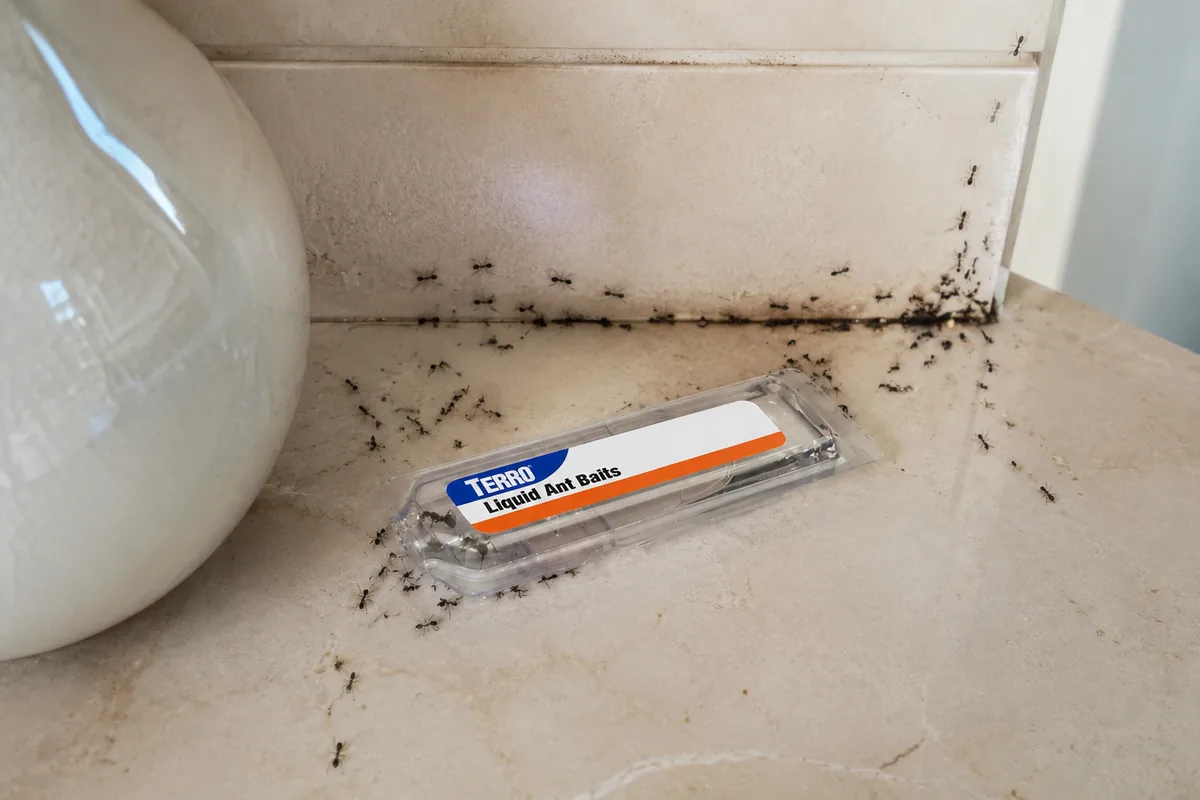
What to Expect on the Timeline: Days to Full Control
Expect a two-phase timeline rather than overnight results. First, worker ants find the stations, drink the borax-based liquid, and carry it back to the colony — activity often drops within days. Then the bait keeps working in the background, and complete control may take up to 2-4 weeks depending on how bad the infestation is. Don't be alarmed if ants crowd the stations early on; that surge is normal and is exactly how the product is meant to work. The listing describes a borax-based liquid bait that lures worker ants in to feed and carry it back to the colony, wiping out both the visible ants and the hidden nest population, queen included. That colony-kill mechanic is what sets the timeline. Since the bait has to be ferried home by foraging workers instead of killing on contact, the first thing you see is often the opposite of what you'd expect — more ants, not fewer, as workers recruit nestmates to the food source. One reviewer watched ants swarm the baits within the first 24 hours, which unsettled them at first, but activity stopped completely in about 3-4 days. According to the listing, the fast-acting bait cuts ant activity within days as workers carry it back, and once placed it keeps working for weeks as long as ants keep visiting, with complete control possibly taking up to 2-4 weeks depending on infestation size. Another reviewer who held off on judging saw the problem apparently fully resolved after 3 1/2 weeks, with no ants since the previous Friday — right at the top of that window. Yet another advised giving it a week or more before expecting results, noting their ants walked past the station for two days before finally engaging, a reminder that discovery time varies. To use the timeline effectively, place the ready-to-use stations along baseboards, corners, countertops, and other high-traffic areas where ants commonly travel, as the listing recommends. Do not disturb or kill the ants feeding at the stations; the swarming you see in the first day or days is the delivery mechanism that carries the bait to the hidden colony and queen. Resist removing stations as soon as trails fade, because the listing indicates the bait keeps working for weeks and complete control may take up to 2-4 weeks depending on infestation size, so leaving stations in place through that window gives the colony-kill process time to finish. If ants ignore a station at first, one reviewer found results only after giving it a week or more, so patience during the discovery phase is reasonable. Because a larger infestation pushes the timeline toward the longer end of the range, homeowners with heavy activity should plan on the multi-week window rather than expecting the problem to vanish in a day. These timeline expectations come from the product listing and individual customer reviews, so they describe typical patterns rather than guaranteed outcomes for every home. The 2-4 week window for complete control depends on infestation size, and individual experiences vary: one reviewer saw activity stop in about 3-4 days, another needed more than a week before ants even engaged with the station, and one reported the problem seemingly gone within hours, which is faster than the listing suggests. Community reviews also note two recurring caveats: ants can return months later when a new colony appears, so this is not a permanent fix, and bait stations may lose attractiveness once open for a while, with fresh stations reportedly performing better. The listing itself does not specify how long an opened station remains attractive, so users monitoring a slow-declining infestation may need to replace stations rather than assume the original placement is still fully effective.
Where and How to Place Bait Stations Indoors
The most effective way to place bait stations for indoor ant colony elimination is to position them in high-traffic areas frequented by ants. According to the product details, liquid ant bait stations provide comprehensive ant control by attracting and killing ants like acrobat ants, crazy ants, ghost ants, little black ants, odorous house ants, and pavement ants. Place the stations along baseboards, in corners, on countertops, and along ant trails where ants are actively moving. This ensures that ants will discover the bait and carry it back to their colony. The stations are easy to use as they come ready-to-use with no preparation needed, making them ideal for homeowners seeking a no-mess solution for recurring indoor ant infestations. The placement is critical because the liquid ant bait uses a borax-based formula that attracts worker ants to consume it and carry it back to the colony. This action effectively eliminates both visible ants and hidden nest populations, killing the queen and the entire colony for complete indoor ant killer control. As the worker ants transport the liquid ant bait back to their colony, the ant activity reduces within days, providing widespread elimination of entire ant populations with these sugar ant traps indoor. By placing the stations in areas where ants travel regularly, you facilitate this process, leading to faster results. This colony-killing mechanics is what makes the bait stations superior to other methods that only target visible ants. To apply the placement guide, first identify the paths ants are taking through your home, such as along baseboards, corners, countertops, and other high-traffic areas. Open the ready-to-use ant bait stations and place them directly in these locations without any additional setup. Leave the stations in place for the long-lasting effect, where the bait continues to work for weeks as long as ants continue to visit the stations. You can observe the ants swarming the stations initially, which is a sign of the bait being effective. Replace the stations if they lose attractiveness after being open for a while. Allow sufficient time, up to 2-4 weeks, for complete control depending on the size of the infestation. This practical approach helps in eliminating the whole colony rather than just the visible ants. This method has its limitations. While the bait stations can kill the queen and the entire colony, leading to reduced ant activity within days, ants may come back eventually. This wipes out the colony that's bothering you, but months later a new one can show up, so don't expect a permanent fix. This is a common issue with recurring infestations. Furthermore, once a bait station has been open for a while, the ants seem to lose interest in it. I don't know if the liquid stops being attractive or stops working, but fresh stations always perform better. Therefore, using fresh stations is recommended for best results. The product provides effective control for the current infestation but may not prevent future occurrences without additional measures.
Why Ants Come Back and What to Do About It
Indoor ant bait stations can eliminate the colony currently infesting your home, but they are not a permanent barrier against future infestations. A successful bait campaign kills the active colony, including the queen, yet new colonies can appear months later and require a fresh round of treatment. Additionally, bait stations that have been open for an extended period can lose their attractiveness to ants, meaning the liquid may still be present but ants will no longer feed on it. To address recurrence effectively, users should refresh old stations and re-treat rather than assuming the original product failed. The product is designed as a borax-based liquid ant bait that attracts worker ants to consume the bait and carry it back to the colony, eliminating both visible ants and hidden nest populations, including the queen. Complete control may take up to 2-4 weeks depending on the infestation size, and the bait continues to work for weeks as long as ants continue to visit the stations. However, this mechanism only targets the colony that is actively feeding on the bait. It does not create a protective shield around your home. When a reviewer reported that ants eventually come back, they explained that the product wipes out the colony currently bothering you, but months later a new one can show up, so it should not be expected to be a permanent fix. This is consistent with how bait stations function: they are reactive, not preventive. The second factor is bait freshness. The same reviewer observed that once a bait station has been open for a while, the ants seem to lose interest in it. They noted that fresh stations always perform better, though they were unsure whether the liquid stops being attractive or stops working. This suggests that the palatability of the liquid bait degrades over time after opening, reducing feeding activity even before the station is empty. Therefore, two distinct issues drive recurrence: the arrival of entirely new colonies from outside, and the declining attractiveness of aging bait stations that may leave a current infestation under-treated if not refreshed. Place ready-to-use bait stations along baseboards, corners, countertops, and other high-traffic areas where ants commonly travel. Because the borax-based formula relies on worker ants transporting the liquid back to the colony, do not disturb the feeding lines, even if ant activity appears to increase initially. A reviewer noted seeing ants swarming the stations within the first 24 hours, which is how the process is supposed to work, with activity stopping within about 3-4 days. Monitor the stations over the full 2-4 week window, as complete control depends on infestation size. If ants are passing up a station that has been open for a while, replace it with a fresh one rather than waiting, since a reviewer found that fresh stations consistently perform better. If ants return months later, recognize this as a new colony rather than a failure of the original treatment, and deploy fresh stations promptly. Keep extra stations on hand so you can refresh aging bait and respond quickly to new incursions without delay. This product targets common household ants including acrobat, crazy, ghost, little black, odorous house, and pavement ants, but it is not a permanent preventive barrier. New colonies can appear months after a successful campaign, as confirmed by reviewer experience. Bait stations that have been open for an extended period can lose attractiveness, and ants may stop feeding even if liquid remains. The product requires ants to actively visit and carry bait back to the colony, so stations placed where no ant trails exist may see little to no activity. Complete control can take up to 2-4 weeks, and results depend on infestation size. Individual experiences vary, and community reviews describe personal results that may not be universal.
How Liquid Bait Stations Stack Up Against Other Indoor Ant Baits
| Answer | Liquid bait stations like the primary product (B00E4GACB8) rely on a borax-based liquid that draws in common household ants — acrobat, crazy, ghost, little black, odorous house, and pavement varieties among them. Worker ants feed on the bait, then carry it home to the colony, ultimately killing the queen and wiping out the whole population for thorough indoor control. By contrast, the Ant & Roach Bait (B075D6WXTN) comes as a pre-filled dual station that targets ants, roaches, and silverfish through the same attract-and-carry approach, activated with a simple twist tab. The T334B Indoor Multi-Surface Liquid Ant Bait (B0DC7TFVZQ) provides discreet stations you can place on a variety of indoor surfaces against common household ants. The bundle (B0CX9G8SQ7) pairs liquid ant killer stations with a ready-to-use outdoor bait stake, covering both indoor and outdoor needs with the same attract-and-kill method. Every one of these formats offers ready-to-use colony elimination rather than just knocking down the ants you can see — expect activity to taper off within days and full control in 2-4 weeks depending on how large the infestation is. |
|---|---|
| Why it matters | The primary product uses a liquid bait that worker ants carry back to the nest, which eliminates the queen along with every other colony member. Control comes quickly — activity drops off within days, and the colony is typically wiped out in 2-4 weeks as long as ants keep visiting the stations. The dual bait station broadens that same attract-and-kill mechanism to roaches and silverfish in a similar pre-filled, twist-tab format. The multi-surface liquid bait can sit on all sorts of indoor surfaces for discreet, effective control of household ants. The stake bundle rounds things out with a ready-to-use outdoor stake that works much like the indoor stations, just for outside use along trails or wherever ants gather. Reviewers consistently describe ants swarming the stations at first and then vanishing within days, with full control often following sustained placement. The borax formula keeps working for weeks, though its appeal can fade once a station has been open for a while. |
| How to apply it | Set the ready-to-use stations along baseboards, in corners, on countertops, or anywhere else ants tend to travel. If you go with the dual bait station, place it where mixed pests — ants, roaches, or silverfish — are active. The multi-surface stations give you discreet options across different indoor surfaces, and the outdoor stake handles ant problems outside. Once in place, the bait keeps working for weeks. Keep an eye on the stations over 2-4 weeks to watch activity decline and the colony come under full control. Swap in fresh stations as needed, since ants can lose interest once one has been open for some time. There's no setup or mixing required, making this a straightforward choice for homeowners dealing with recurring indoor ant problems who want a product that kills the entire colony, queen included. |
| Limit | Ants do eventually return once a colony is eliminated, so this isn't a permanent fix — new colonies can show up months later. Stations can also lose their appeal after sitting open for a while, with ants seeming to lose interest as the liquid becomes less effective. The primary product is indoor-only, and while the stake bundle adds outdoor capability, that may not fit everyone looking for a purely indoor solution. It targets specific ant species and won't cover every pest unless you opt for the dual bait version for roaches and silverfish. It's also not the right pick if you want a spray or aerosol insecticide, and households with pets or children should follow label guidance on placement. Results take patience — full control can take up to 2-4 weeks — and the bait may fall flat if ants simply avoid the station to begin with. |
Using Bait Stations Indoors: Safety and Handling Basics
Read and follow all instructions on the pesticide label for the liquid ant bait stations before use. This ensures proper and safe application for indoor ant control. Always store the bait stations away from children and pets, preferably in a locked utility cabinet or garden shed. Place the stations only in locations where children and pets cannot access them. Keep pesticides away from food, including pet food, to prevent accidental contamination. These practices are vital for maintaining household safety when using ready-to-use ant traps. The safety practices outlined here draw from general pesticide safety guidance applicable to bait products, including the EPA recommendations on rodent bait products (f0a7b917913d183a3840a1c24de534f4). Although this authority source addresses rodenticide baits and does not specifically test, verify, or establish the current model's behavior for ant baits, the principles of label adherence, secure storage, restricted placement, and food separation provide essential general guidance for pesticide safety. This is important because improper use could lead to health risks for children and pets or reduce the bait's effectiveness in killing the ant colony. Users should be aware that this guidance is historical and foundational rather than ant-specific regulation, helping to avoid issues like accidental poisoning while the product attracts ants to the stations for colony elimination. Homeowners should start by carefully reading the label on the liquid ant bait stations to understand safe handling. Position the stations along baseboards, corners, and high-traffic areas in the home but ensure they are inaccessible to children and pets. Store any unused stations in a secure, locked location away from food and pet areas. When using, place them without touching the bait to avoid spreading it. Dispose of dead ants and used stations promptly and safely. For added protection, keep the area clear of food sources. This application method allows the bait to work effectively in eliminating the entire colony while adhering to safety protocols. These safety measures have limitations as the supporting EPA guidance is for rodent baits and does not apply as ant-specific regulation or test the product's colony-killing performance. It is historical and should not be seen as establishing current model behavior. Community observations indicate that while safety is maintained, ants may return from new colonies months later, but this does not affect the safety practices. The guidelines do not cover outdoor use or other pest types. Always refer to the latest label for any changes, and consider professional help for persistent issues. These practices focus on immediate safety but do not guarantee long-term prevention of infestations.
Decision summary
| Good fit | Homeowners dealing with recurring indoor ant infestations; People seeking a ready-to-use, no-mess ant bait station; Users who want a product that kills the ant colony, not just visible ants |
|---|---|
| Limits | These safety measures have limitations as the supporting EPA guidance is for rodent baits and does not apply as ant-specific regulation or test the product's colony-killing performance. It is historical and should not be seen as establishing current model behavior. Community observations indicate that while safety is maintained, ants may return from new colonies months later, but this does not affect the safety practices. The guidelines do not cover outdoor use or other pest types. Always refer to the latest label for any changes, and consider professional help for persistent issues. These practices focus on immediate safety but do not guarantee long-term prevention of infestations. |
Top Liquid Ant Bait Stations for Colony Elimination

TERRO Liquid Ant Killer Bait Stations, Indoor Ant Traps, T300-2, 12-Pack
B00E4GACB8
Good fit
- ATTRACTS & KILLS: Liquid ant bait stations provide comprehensive ant control, targeting common household ants including
- KILLS THE QUEEN & THE ENTIRE COLONY: TERRO liquid ant bait contains borax-based formula that attracts worker ants to
- EFFECTIVE ELIMINATION: Fast-acting ant killer bait reduces ant activity within days as worker ants transport the liquid
Limits
- The supplied product observation records product identity only.

Ant & Roach Bait, 4-Pack, Indoor Ant Killer and Roach Killer | Pre-Filled Dual Bait Stations Attract and Kill Ants, Roaches, and Silverfish, Ready-To-Use Indoor Bait with Twist Tab, T360
B075D6WXTN
Good fit
- Ant & Roach Bait, 4-Pack, Indoor Ant Killer and Roach Killer | Pre-Filled Dual Bait Stations Attract and Kill Ants
Limits
- The supplied product observation records product identity only.

T334B Indoor Multi-Surface Liquid Ant Bait and Killer - Discreet Bait Stations - Kills Common Household Ants,4 Count (Pack of 2)
B0DC7TFVZQ
Good fit
- T334B Indoor Multi-Surface Liquid Ant Bait and Killer - Discreet Bait Stations - Kills Common Household Ants,4 Count
Limits
- The supplied product observation records product identity only.

Bundle of TERRO T300B Liquid Ant Killer, 12 Bait Stations + TERRO T1813B Outdoor Ready-to-Use Liquid Ant Bait Stake Killer Trap - Kills Common Household Ants
B0CX9G8SQ7
Good fit
- Bundle of TERRO T300B Liquid Ant Killer, 12 Bait Stations + TERRO T1813B Outdoor Ready-to-Use Liquid Ant Bait Stake
Limits
- The supplied product observation records product identity only.

Protective Case Compatible with TERRO T300B/T300-3SR Liquid Ant Killer Stations, Reusable Clear Pest Bait Box with Adhesive - No Bait Included - 4PCS
B0H7JN1LPT
Good fit
- Protective Case Compatible with TERRO T300B/T300-3SR Liquid Ant Killer Stations, Reusable Clear Pest Bait Box with
Limits
- The supplied product observation records product identity only.