Daycare supply reference
Bulk Baby Wipes for Daycare Diaper Changing Stations
Bulk baby wipes work well in a daycare changing station only when the room has a clear system for clean storage, one-handed access, pack rotation, child-specific requirements, and disposal. A large case can reduce restocking interruptions, but quantity alone does not make a station efficient or hygienic. Start by deciding where clean supplies live, how many packs can be opened at once, and who is responsible for replacing them.
This reference is for childcare rooms and families supplying wipes for repeated daytime changes. It is not a substitute for state licensing rules, center policy, caregiver instructions, or medical advice. If a child has known skin sensitivities, use the product approved by the caregiver and the facility rather than assuming one bulk option suits everyone.
A Workable Daycare Wipe System
A reliable station separates three jobs that are often treated as one: storing unopened stock, dispensing wipes during a change, and removing used material. Each job needs its own location. Unopened packs belong in protected dry storage. One active pack should sit in the clean supply area within reach before the change begins. Used wipes move directly toward the soiled diaper and covered waste route; they should not pass back across the clean stock.
The CDC's childcare diaper-changing sequence begins with preparation. Clean diapering supplies, including wipes, are brought to the area before the child is placed on the changing surface. That preparation matters because the caregiver must maintain supervision and should not have to open a cabinet, cross the room, or search through a case once the change is underway.
Use a simple pre-change check:
- Confirm that the active pack has enough wipes for the next change without assigning a fixed number to every child.
- Check that the lid closes and the top wipe can be reached without pulling several wipes out at once.
- Put the clean diaper, gloves, liner, bag for soiled clothing, and any approved cream within the facility's designated clean supply area.
- Make sure the covered waste route is ready and does not require reaching across unopened stock.
- Keep the child-specific supply label or instruction visible to staff without placing paperwork on the changing surface.
This system is more important than whether a case contains five hundred or one thousand wipes. A well-run room can use a large case gradually. A poorly arranged room can dry out multiple open packs, mix family supplies, or run short at the point of use even while unopened inventory remains elsewhere.
Separate Clean Stock From the Changing Zone
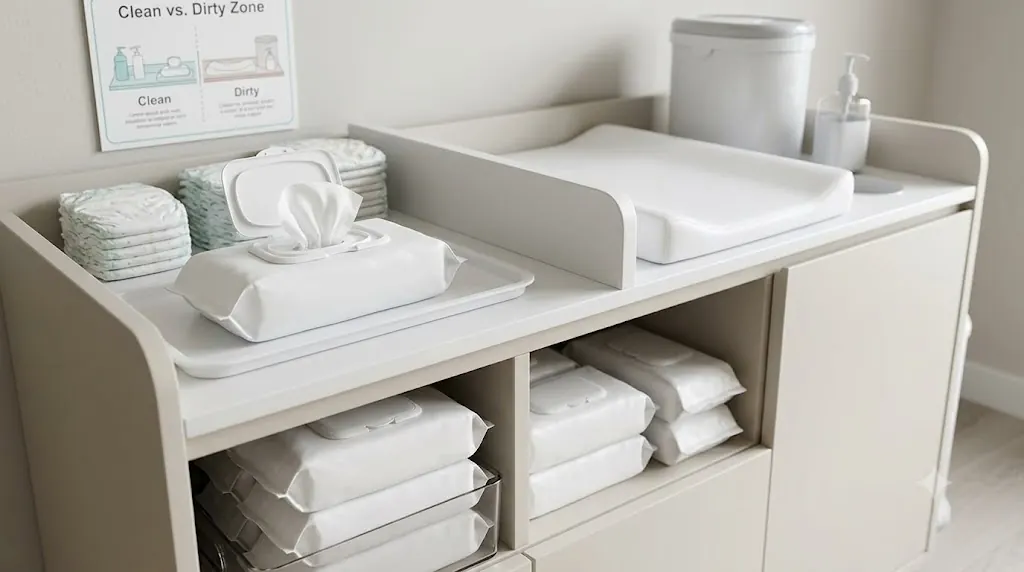
The safest layout is not simply “everything close.” It is “the correct items close, with a one-way path from clean to used.” The active wipe pack can be within arm's reach while still remaining off the changing pad and away from the waste opening. Backup packs should be farther from the immediate work surface, ideally in a closed or protected shelf that staff can access between changes.
The changing surface itself should remain available for the child and the disposable liner. Do not use it as a storage shelf for the open case, spare packs, phones, paperwork, or personal items. During cleanup, the CDC calls for removal of the liner, cleaning of visible soil, and application of a disinfectant appropriate for the surface. Products stored on the surface create more objects to move and more opportunities for contamination.
Think in zones rather than inches:
| Zone | What belongs there | What should stay out | |---|---|---| | Protected backup storage | Sealed wipe packs, unopened diapers, labeled reserve supplies | Used items, open waste, cleaning cloths, damp packs | | Clean reach zone | One active flip-top pack and the supplies prepared for the current change | Soiled clothing, used gloves, discarded liner | | Changing surface | Child and disposable liner | Bulk stock, paperwork, phones, spare open packs | | Soiled route | Used wipes inside the soiled diaper, bagged clothing, covered waste | Clean packs and unused diapers |
The exact layout will change with the furniture. A wall-mounted cabinet, a shelf below the station, and a rolling supply cart can all work if the clean and soiled paths remain distinct. A station without protected storage is a poor match for a large bulk case because the room cannot preserve the value of the unopened stock.
Estimate Replenishment Without Pretending Every Change Is Identical
There is no useful universal “wipes per diaper” number. A routine wet change, a bowel movement, a child who needs extra care, and cleanup of visible soil place different demands on the active pack. Staff technique and one-at-a-time dispensing also affect consumption. A fixed assumption can therefore create either unnecessary overstock or a shortage during the busiest part of the day.
Use the center's own replenishment record instead. For one or two normal operating weeks, note the date each pack is opened and the date it is replaced. The record does not need child names or health information. Its purpose is to show how quickly a specific room uses an active pack and whether partially used packs are being abandoned, moved, or allowed to dry.
A practical reserve point is based on lead time, not a dramatic stockpile. Ask how long it takes the center or families to provide another case, whether deliveries are dependable, and how much sealed storage is available. The reorder point should leave enough unopened packs to cover that interval plus a modest operational buffer. It should not exceed what the room can rotate before packaging is damaged or policies change.
For parent-supplied rooms, the same record can show when a family needs a notice. For center-supplied rooms, it can show which classroom consumes stock fastest. The record is an inventory tool, not a judgment about caregiver behavior. A sudden increase may reflect enrollment, schedule changes, illness protocols, or a few unusually messy days rather than waste.
Bulk value should be judged by usable wipes. A cheaper case is not economical if lids fail to close, several packs remain open, or the room cannot store them cleanly. Likewise, a smaller multipack may cost more per wipe but fit a center with limited storage and slower rotation. Current prices are deliberately left to Amazon because they change.
Choose Pack and Lid Behavior for Repeated Staff Use
For a shared changing station, the package is part of the daily routine. A flip-top lid can be reopened many times without requiring staff to manage a separate tub. The opening should let a caregiver find the next wipe with one hand, but the pack still needs to close fully after the change. If the next wipe falls back into the pack, staff may touch the opening repeatedly. If several wipes pull out together, the extras may dry or be discarded.
Test a new pack format during normal operation before ordering more cases. Watch for four things: whether the pack stays in place while a wipe is pulled, whether one wipe separates cleanly, whether the lid closes without aligning a loose adhesive flap, and whether the package remains moist near the end. This is a practical handling check, not a laboratory performance test.
Pack size also changes the answer. A very large soft pack may last longer but become awkward as its shape collapses. Smaller packs can be easier to assign to rooms or children and may spend less time open. They also create more packaging and more frequent replacement. The correct balance depends on room volume, storage, and policy.
Do not confuse “unscented,” “fragrance free,” “hypoallergenic,” or similar listing language with universal suitability. Those attributes can help narrow choices, but they do not replace caregiver instructions or the facility's ingredient policy. When a child requires a particular product, label and store it according to center policy rather than pooling it with general stock.
Build a Rotation and Labeling Routine
The simplest rotation rule is one active pack per approved supply stream. A room using center-provided wipes can keep one open pack at the station and sealed replacements in order by receipt or expiration information on the package. A room using family-provided supplies may need separate labeled packs. Opening several identical packs “for convenience” makes it harder to notice which one is drying out.
Mark the opened date in the manner allowed by the facility. The date is not a promise that the pack lasts a fixed number of days. It gives staff a quick signal when a pack has remained open much longer than the room's usual cycle. If the package no longer seals, the wipes feel unusually dry, the pack is visibly damaged, or the supply identity is unclear, follow center policy rather than putting it back into rotation.
Assign ownership for three routine checks:
- Opening staff confirms that the clean reach zone has one usable pack and adequate sealed reserve.
- The caregiver closes the lid immediately after each change and reports a dispensing or package problem.
- The person responsible for room supplies records replacements and sends reorder notices before the final reserve pack is opened.
This division prevents a common failure: everyone assumes someone else will replace the pack. It also keeps the center from using case quantity as the only inventory signal. The visible top layer of a bulk carton can look full while several rooms are already on their last active packs.
The routine should include waste handling and handwashing, but wipes do not replace either step. The CDC sequence places used wipes with the soiled diaper, then calls for surface cleanup, disinfection according to the product label, and thorough handwashing. Baby wipes are a cleaning supply for the diaper change, not a disinfectant for the station and not a substitute for soap and water.
Where the Pampers 18-Pack Case Fits
The Pampers Sensitive case for ASIN B0BJ13K7FR is listed as 18 flip-top packs totaling 1,008 wipes. Amazon describes the wipes as water based, fragrance free, unscented, hypoallergenic, and free of rubbing alcohol and natural rubber latex. Those listing attributes make the case relevant to centers seeking a large general-use supply with individual flip-top packs.
Its best fit is a room or center that can distribute sealed packs across multiple stations while keeping only one pack open at each station. Eighteen separate packs are easier to rotate than one oversized refill format, and a flip-top pack does not require the center to refill a permanent dispenser. The case quantity is also large enough that reorder timing and storage deserve attention before purchase.
Skip or pause this option when the center lacks protected storage, when families must provide individually assigned wipes, when the product does not match a child's approved ingredient requirements, or when the center cannot use the case before packages are damaged or policies change. The Amazon listing does not establish how many changes the case will cover, how long an opened pack remains usable in a particular room, or whether it performs better than the alternatives below.
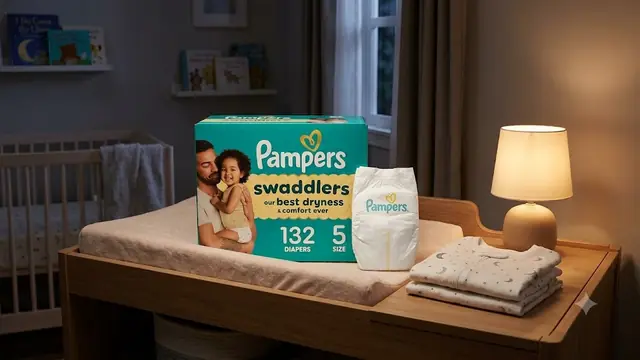
The station image shows the intended supply arrangement, not Pampers packaging. The exact product image and current variation should be checked on Amazon before purchase because packaging and pack configuration may change.
Five Bulk Wipe Options for the Same Daycare Task
Links in this comparison may earn this site a commission. Product details and current prices are shown on Amazon.
These products are not ranked by skin comfort, cleaning performance, moisture retention, or dispensing quality. No side-by-side test was performed. Use the cards to compare case size, pack format, listing attributes, and the way each option fits the station's storage and assignment system.

Pampers Sensitive Baby Wipes, 18 Flip-Top Packs — B0BJ13K7FR
Where it fits: A center wants a high-count case that can be divided across several clean stations, with individual flip-top packs and fragrance-free, unscented listing attributes.
Skip when: The exact current variation does not match the room's policy, storage capacity, or child-specific requirements. Do not treat the case total as a fixed number of diaper changes.

Huggies Natural Care Sensitive Baby Wipes, 15 Flip-Top Packs — B0BL8RWHV2
Where it fits: The center needs another large unscented multipack but wants a somewhat smaller case than the primary 18-pack configuration.
Skip when: The current pack format, ingredient list, or variation does not match facility or caregiver requirements. A smaller total does not automatically mean easier dispensing.

Huggies Skin Essentials Baby Wipes, 10 Flip-Top Packs — B0CQ74ZPTW
Where it fits: A lower pack count better matches one room, a shorter restocking interval, or limited protected storage.
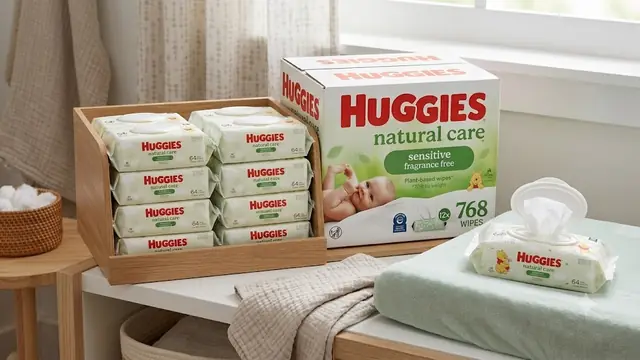
Skip when: The center needs to supply several busy stations from one delivery or the current Amazon variation differs from the ten-pack format reviewed here.

Amazon Elements Unscented Baby Wipes, Flip-Top Packs — B07H53W5WP
Where it fits: A center wants another high-count, individually packed route and can verify the current pack count and ingredients on the product page.
Skip when: The purchase depends on a specific count or formulation that is not clearly confirmed in the current variation. Marketplace titles and images can change.
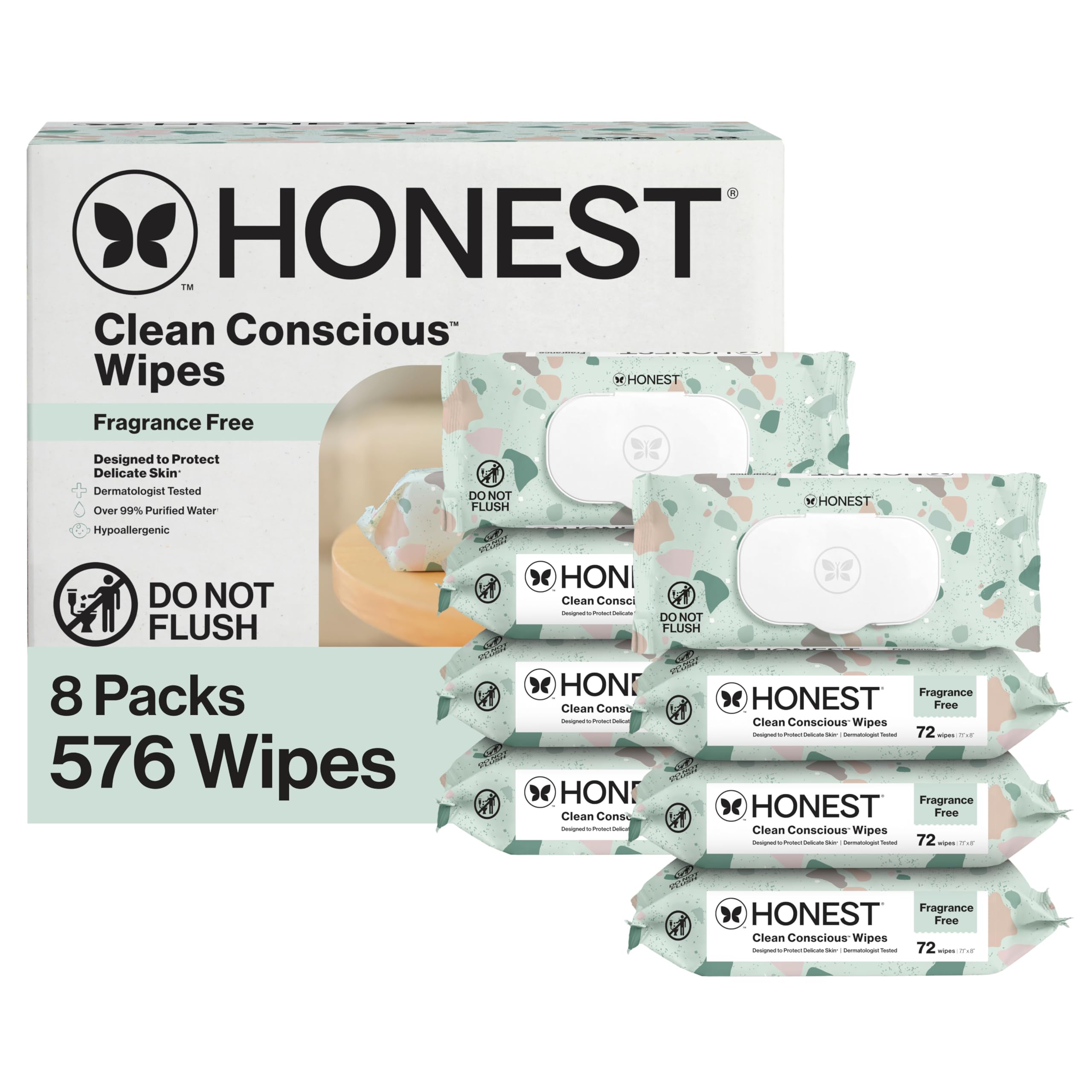
The Honest Company Fragrance-Free Baby Wipes, 8-Pack — B01NASH63G
Where it fits: A smaller fragrance-free multipack better matches slower rotation, limited storage, or a center testing a different approved product stream.
Skip when: Eight packs will not cover the delivery interval or the current formulation and package do not match the center's requirements.
The useful comparison is not simply 18 packs versus 15, 10, or 8. A busy multi-room center may benefit from a larger case if sealed packs can be distributed cleanly. A small program may waste less with a lower-count multipack. Every option still depends on one active pack, protected reserves, reliable closure, clear ownership, and child-specific policy.
Limits and Source Boundary
This reference combines the exact Amazon product configurations checked on July 12, 2026 with the CDC's diaper-changing steps for childcare settings, last updated March 18, 2025. The CDC supports the preparation, cleaning, disposal, surface disinfection, and handwashing sequence. It does not endorse any wipe brand or establish a preferred pack count.
No product on this page was purchased, opened, moisture-tested, dispensed, used during a diaper change, or compared in a childcare room for this article. There is no measured wipe strength, liquid content, lid-cycle durability, irritation rate, wipes-per-change average, or cost-per-usable-wipe comparison. Customer reviews and community discussions helped identify common concerns, but they were not quoted or treated as proof.
Product titles, images, pack counts, formulations, and links can change. Check the current Amazon variation and the product packaging before purchase. Prices, coupons, ratings, review counts, availability, and delivery promises are not stored on this page.
Common Questions
How many wipe packs should a daycare station keep open?
Usually one active pack per approved supply stream is easier to control than several open packs. Separate child-specific supplies when policy requires it. Keep sealed backups in protected storage and replace the active pack through a defined rotation routine.
Where should backup wipes be stored?
Store sealed packs in a clean, dry, protected location away from the changing surface and waste route. The exact cabinet or shelf matters less than maintaining separation and making stock accessible between changes rather than during one.
Can one wipe product be used for every child?
Not automatically. Facility policy, caregiver instructions, ingredient sensitivities, and licensing requirements can require separate products. Listing terms such as fragrance free or hypoallergenic do not establish universal suitability.
How can staff notice a pack before it dries out?
Keep only one pack open, close the lid after every change, record the opened date if policy permits, and report a lid or dispensing problem. An unusually long-open pack, damaged closure, or noticeable change in moisture should trigger the center's replacement procedure.
What belongs within arm's reach of the changing surface?
Before the change begins, prepare the clean diaper, active wipe pack, gloves, liner, approved cream and tissue, and any bag needed for soiled clothing. Keep backup cases, paperwork, phones, and unrelated supplies off the changing surface.
Sources
- CDC: Healthy Habits: Diaper Changing Steps for Childcare Settings, updated March 18, 2025.
- Amazon product page for Pampers Sensitive Baby Wipes, ASIN B0BJ13K7FR, checked July 12, 2026.
Last reviewed July 13, 2026. Corrections and product-variation changes should be rechecked against the two sources above before publication.